
Quick Answer
If you see peeling or flaking paint, chalky residue on the siding, cracked caulk, bare or gray wood, or soft spots in the trim, your house needs paint now or very soon. Most Kansas City exteriors need a repaint every 7 to 12 years.
Not every faded-looking house needs a full repaint right away. Sometimes the paint is still in good shape, and a little maintenance buys you several more years. Other times, what looks cosmetic is actually water getting into your siding.
Walk around your house with this checklist. Start with the south and west sides, which take the most sun and usually wear first.
1. Peeling, Flaking, Or Blistering Paint
This is the clearest sign. When paint lifts, it no longer protects the wood underneath. Small isolated spots can be scraped and touched up, but peeling across large areas means it's time for a repaint.
2. Chalking
Rub your hand across the siding. If it comes away with a powdery residue, the paint's binder is breaking down. Chalky paint has lost much of its protection and won't hold a fresh coat properly unless it's washed and prepped.
3. Cracked Or Missing Caulk
Look at the joints around windows, doors, corner boards, and where siding meets trim. Failed caulk is how water gets behind your siding, and it's often the first step toward rot. If caulk is the main problem, re-caulking can be a smart short-term fix.
4. Bare Or Graying Wood
Any wood without paint is absorbing moisture. Gray, weathered wood on trim or siding needs to be prepped and primed soon.
5. Soft Spots Or Wood Rot
Press on the bottoms of door frames, window sills, and trim boards near the ground. Soft or spongy wood means rot has already started. Here's how to spot and repair it.

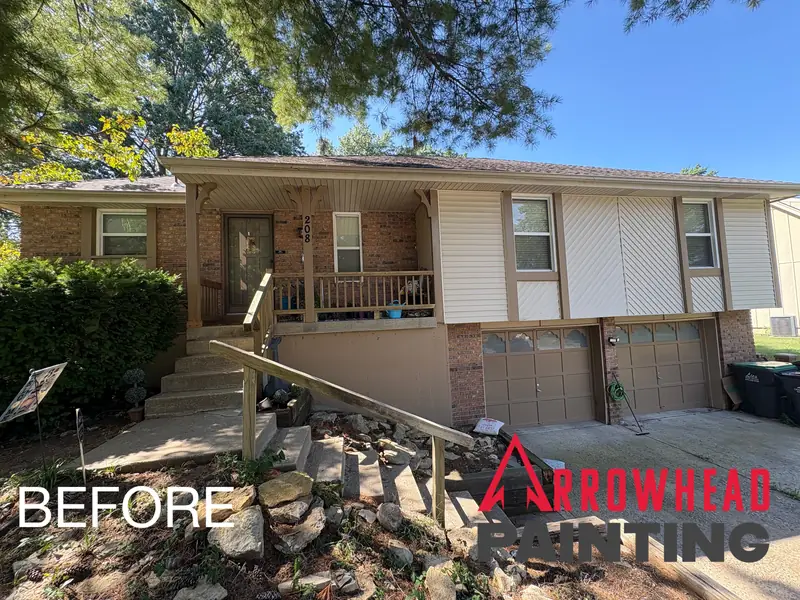
6. Fading That's Uneven
Some fading is normal. But if the sunny sides of your house are noticeably lighter than the shady sides, the coating is wearing thin where it matters most.
7. It's Been 7 To 12 Years
Most Kansas City exteriors need a repaint every 7 to 12 years, depending on siding material, sun exposure, paint quality, and how well the last job was prepped. If you don't know when the house was last painted, that's a good reason to have it checked.
When Maintenance Is Enough
If your paint is still tight and colorful, and the issues are limited to a few caulk joints or a small area of peeling, a touch-up and re-caulk can protect your home for a few more years. We'll tell you honestly if that's the case. A full repaint isn't always the right answer.
Selling soon? A fresh exterior is one of the most visible upgrades buyers notice, and fixing peeling paint and rot ahead of time can head off inspection issues. Here's what to paint before you list.
Get A Second Set Of Eyes
Every Arrowhead estimate includes a walk-around where we check paint condition, caulk, and wood, and point out anything that needs attention. Even if you're not ready to paint, it's a good way to know where your house stands. Request a free estimate.
Frequently Asked Questions
Can You Paint Over Peeling Paint?
Not until the loose paint is scraped and sanded off and any bare wood is primed. Paint over peeling paint will peel again, usually within a season or two.
Is Touching Up Enough, Or Do I Need A Full Repaint?
If the problems are a few small spots and the rest of the paint is still tight and colorful, touch-ups and fresh caulk can buy a few years. If peeling or chalking covers large areas, a full repaint is the better value.
How Often Should A House Exterior Be Painted In Kansas City?
Every 7 to 12 years for most homes. Siding type, sun exposure, and the quality of the last paint job all move that number.

Cade Zerr is the owner of Arrowhead Painting KC, leading a team with more than 35 years of combined painting experience. More about Cade